A coffee pouch can look complete on screen while its valve occupies space needed for gripping, filling or sealing. Use the SunDance announcement as a reason to review those interfaces, then draw the valve and handling zones on the same controlled pouch drawing.
SunDance’s September 28, 2026 release announced custom coffee valve pouches combining a one-way degassing valve with digital printing. Packaging Europe reported the announcement on October 2. The announcement does not supply the valve dimensions, line clearances, material barrier data or a validated filling setup.
What the announcement supports
The company describes the valve as allowing carbon dioxide from freshly roasted coffee to leave the pouch while limiting oxygen entry. It presents short-run graphics and seasonal or limited-edition products as intended uses. These are company descriptions, rather than independent shelf-life results. The source is the September 28 SunDance release distributed by PR Newswire, read alongside the Packaging Europe report.
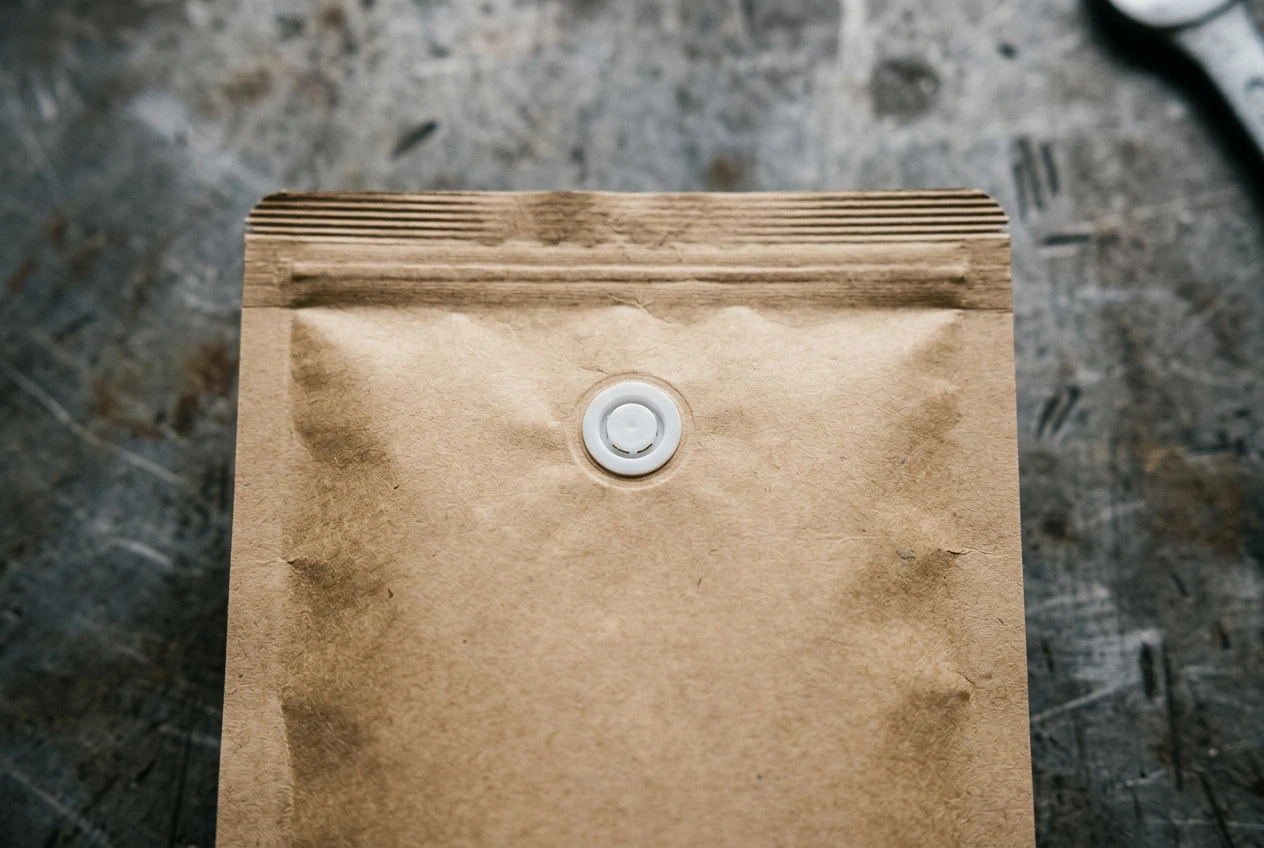
The generic valve-pouch scene identifies the attachment to locate on a drawing. It does not show SunDance’s pouch or establish the performance of any valve.
Draw the valve against the operations
Ask the pouch supplier for the valve footprint, attachment details and any permitted placement zone. Ask the filler integrator for the gripping and opening areas of the intended machine. Overlay these on the structural drawing and mark the top sealing area and filling access. Where a dimension is still unknown, keep it as an open item with a named owner.
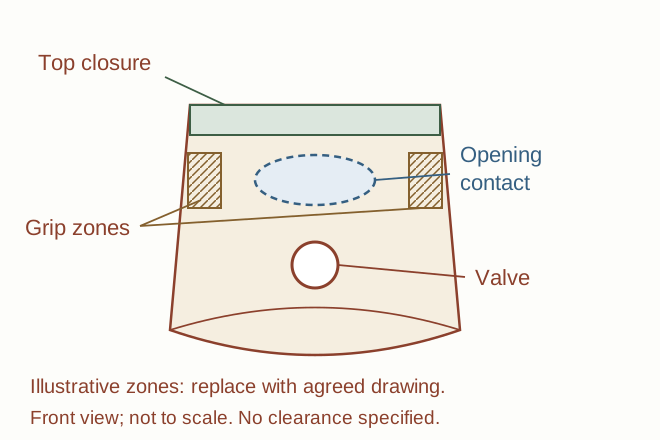
The hatching marks grip contact areas; the dashed blue envelope marks an opening-device contact area on the pouch face. This front view does not show out-of-plane opening motion. The overlay asks whether the valve footprint intersects any required contact or access area. Its locations are illustrative, so the real drawing needs the supplier’s and integrator’s dimensions before artwork is frozen.
HonorPack’s current process description, accessed October 16, 2026, distinguishes pouch grippers from the vacuum cups used for opening. That distinction grounds the two contact functions shown here; the drawing does not reproduce an HonorPack machine layout or approved contact dimensions.
| Design item | Information required | Sample check |
|---|---|---|
| Valve position | Footprint and location tolerance | Attachment stays clear of the agreed handling area |
| Filling access | Product, nozzle and mouth-opening requirements | Product enters without unwanted contact or spillage |
| Top closure | Seal layout and any zipper or fold | Closing operation uses the intended clear area |
| Print and variable data | Artwork revision and code zone | Valve and handling do not obscure the information |
| Final pack form | Filled product and intended presentation | Pack sits and handles as the brief requires |
Keep the series design controlled
For several blends or seasonal versions, maintain one structural reference unless a change is deliberate. Put each artwork variant against the same valve location and variable-data zone. A small graphic shift is easier to review when the structural drawing remains stable.
Digital printing does not remove the need to control versions. Create a matrix that identifies the blend, artwork file, pouch structure and approved sample. Make any material or valve change visible in that record instead of recording it as a graphics-only update.
Trial the filled shape
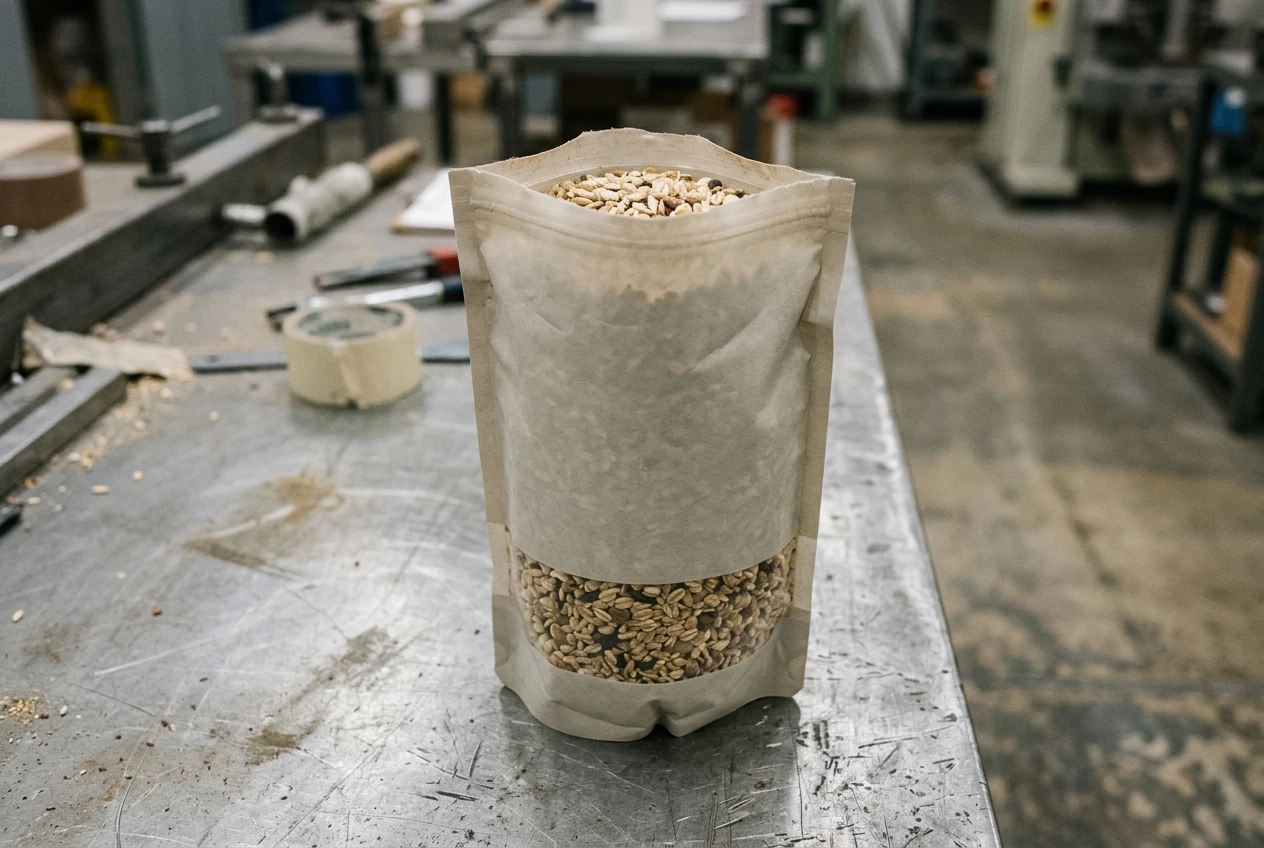
An empty pouch and a filled pouch occupy different shapes. The generic filled sample illustrates why the design review should include the intended product and closure state. It supplies no conversion between nominal pouch dimensions and coffee weight.
Prepare trial samples with the production-intended valve and pouch structure. Record their supplier references, the product condition and the drawing revision. Observe opening, filling, sealing and subsequent handling. Define the acceptance criteria with the responsible packaging and quality teams; the announcement provides none for those operations.
For a failed trial, distinguish the observed contact or placement problem from a proposed explanation. A mark near a valve is an observation. A conclusion that the valve caused it needs a controlled comparison or other supporting evidence.
Close the evidence gaps before a design release
Keep barrier, valve specification, sealing performance and shelf-life requirements in separate fields. A plausible valve position cannot establish those properties, and a marketing claim about freshness does not replace a package evaluation.
Use the pouch-sizing worksheet for the geometry and sample plan. The design case-study guide explains how these proposed checks differ from the facts reported about a named company’s change.