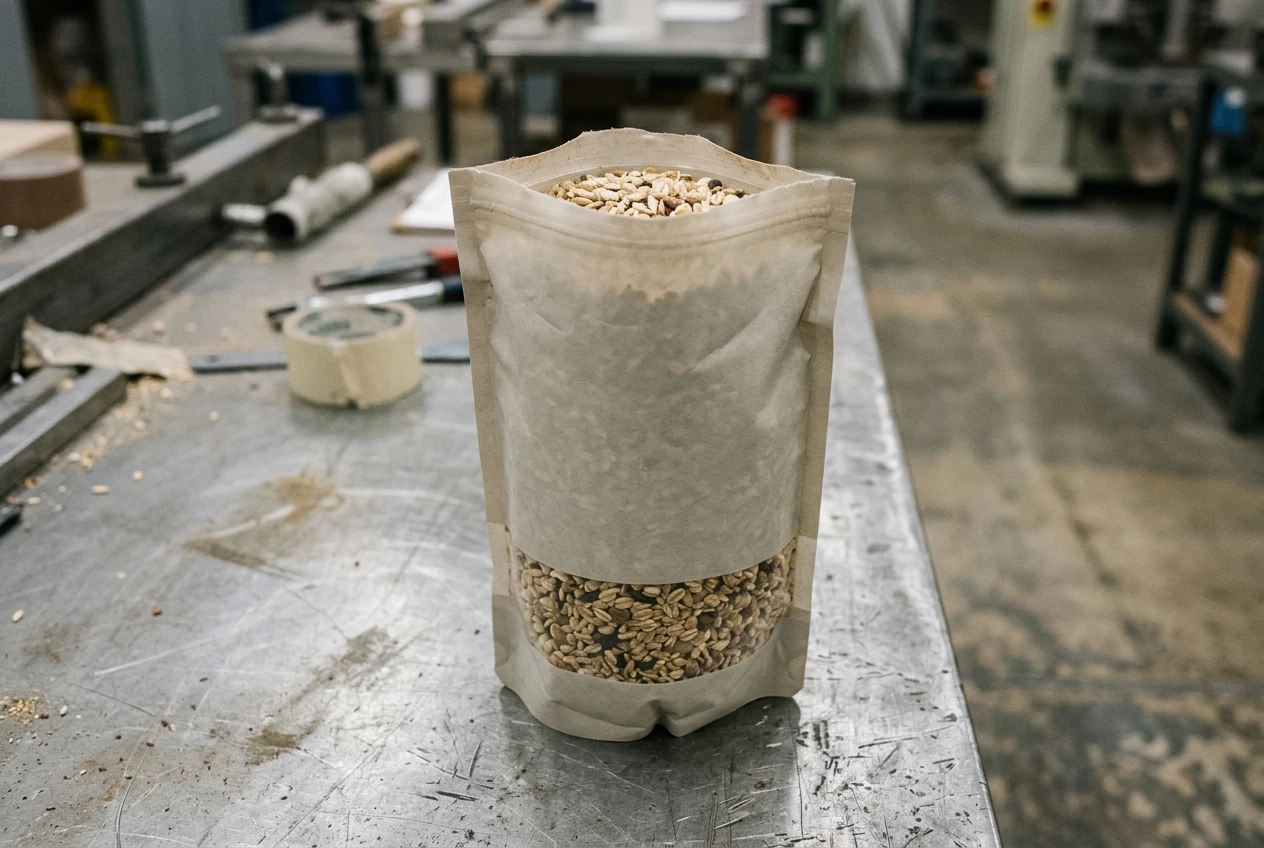
A bottle’s appearance does not establish that it can be transferred, restrained and capped on an existing line. Review the neck finish and the surfaces used for handling, with matching closure drawings and representative samples, before releasing the bottle design.
This is a design handoff review. It does not specify capping torque, sealing limits or interchangeable neck finishes.
Give the neck its own controlled drawing
Identify the bottle and closure references separately. Ask their suppliers for the matching neck-finish and closure drawings, including the relevant tolerances and any liner or tamper feature. A nominal diameter in a marketing description cannot replace that interface definition.
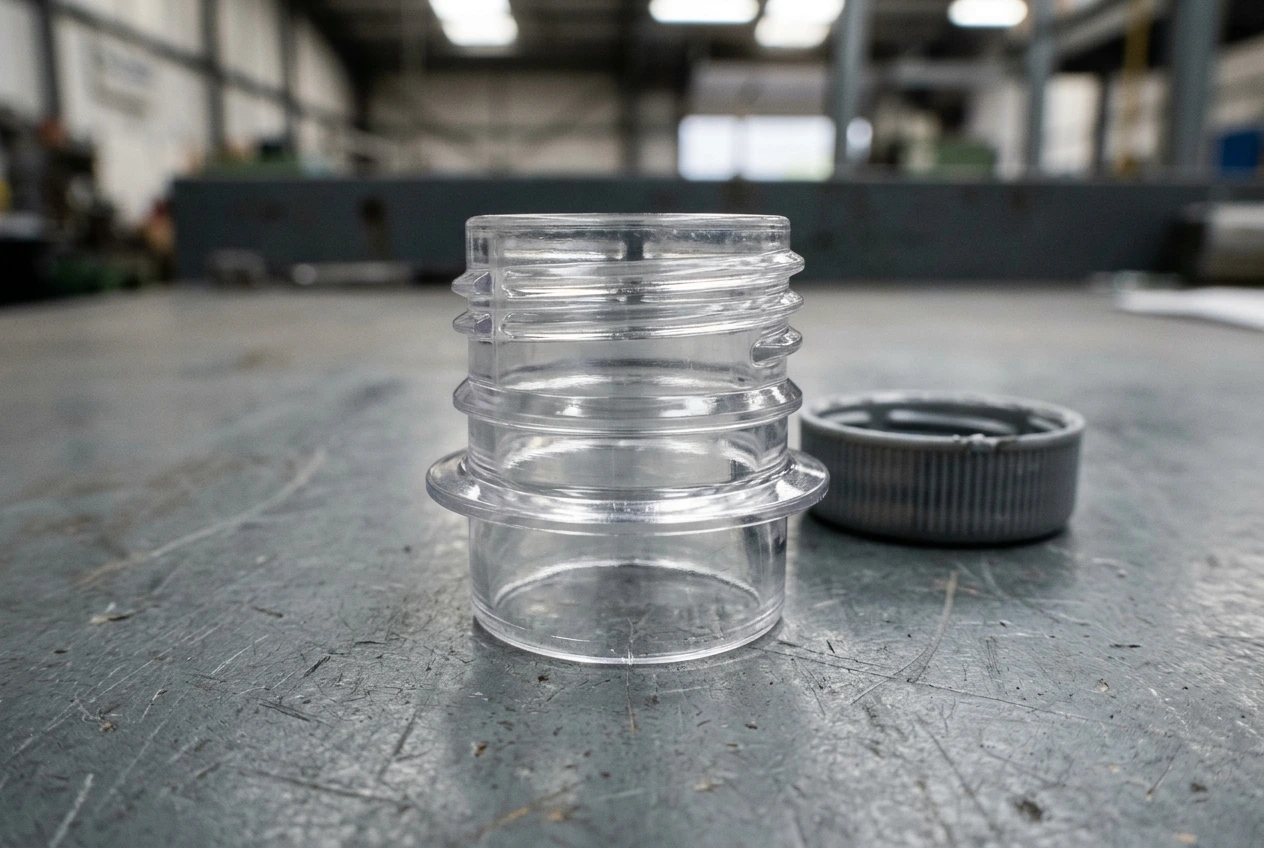
Krones’ packaging design description treats the product, cap, decoration and production conditions as inputs to development. Its process includes sample tests and checking compatibility with existing line equipment. Those steps support a design review based on physical evidence rather than a rendering alone.
| Design record | Information to identify | Reviewer who must resolve it |
|---|---|---|
| Neck and closure | Matching drawing revisions and component references | Bottle and closure suppliers |
| Handling surfaces | Neck ring, body areas or other intended references | Line integrator |
| Shape and orientation | Features that require angular positioning | Designer and integrator |
| Material and filled state | Production material, fill condition and deformation concerns | Packaging and quality teams |
| Decoration | Labels, coatings and protected appearance areas | Designer and converter |
| Trial sample | Tooling origin and limitations of the sample | Sample producer and trial owner |
Mark what the machine can touch
Use the bottle drawing to mark the intended support and guiding surfaces. Identify areas that carry decoration or must remain free of scuffing. If the design is non-round, show the orientation requirement explicitly. Ask the integrator how the actual conveyor and transfer parts establish that orientation.
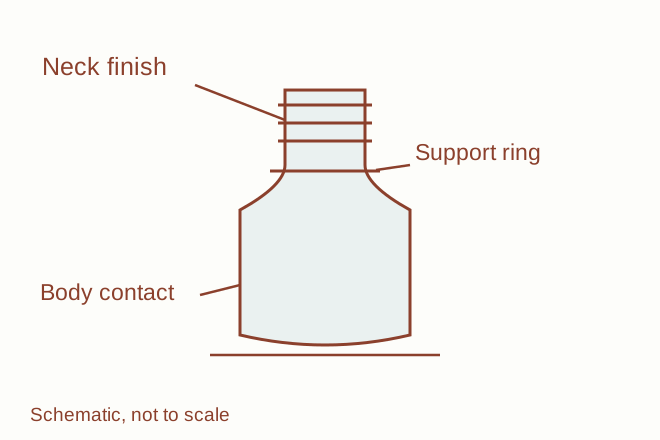
The schematic marks body and neck references as separate features. It supplies no capper dimensions and does not assume a particular line uses neck handling. The actual contact surfaces must come from the installed equipment review.
A lightweight or squeezable bottle should be represented by a sample that the line team considers meaningful. A rigid printed model can answer appearance questions while misrepresenting deformation under restraint. State what each prototype can and cannot demonstrate.
Review transfer and restraint before the cap is applied
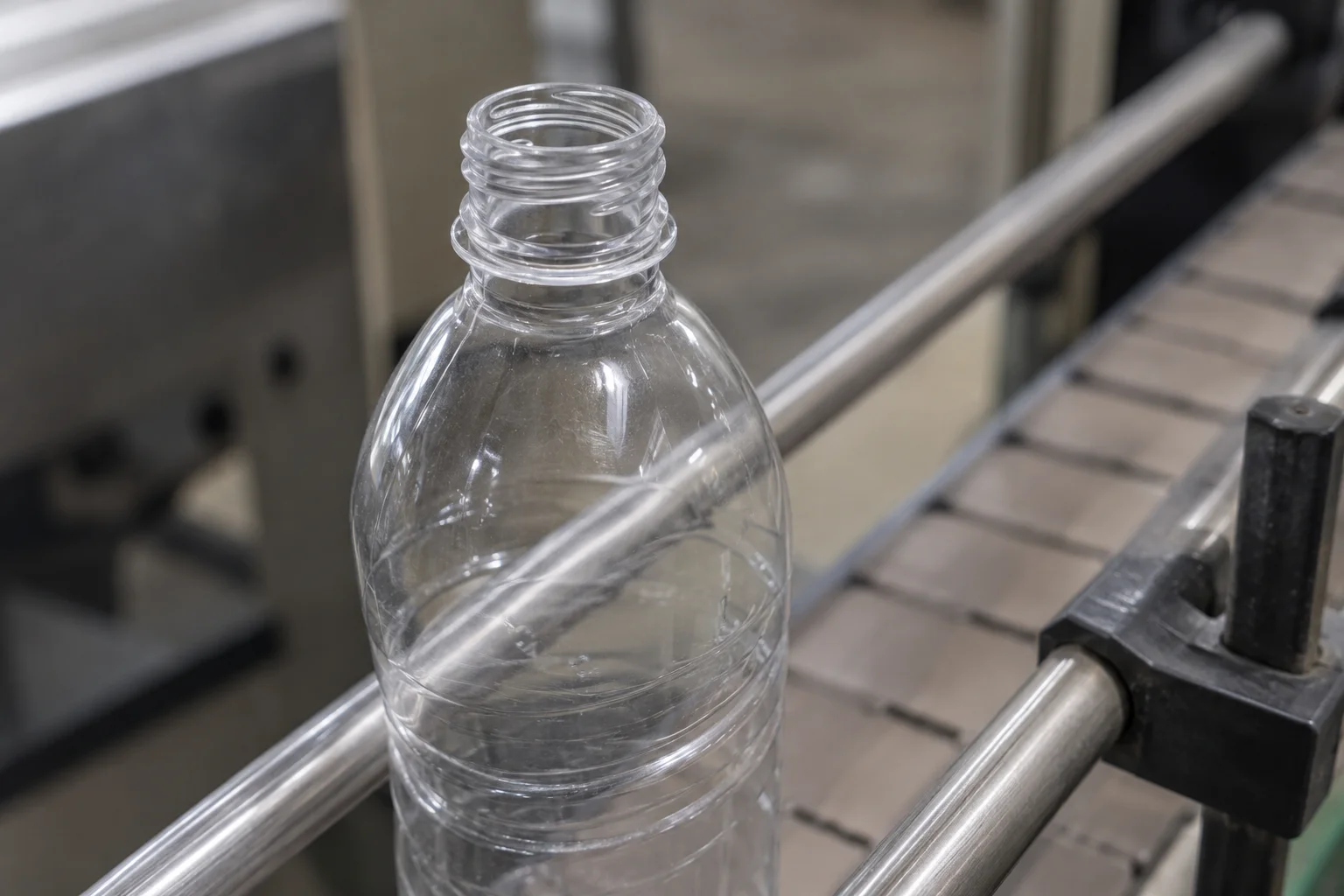
The guide-rail scene illustrates a body-contact location. It is not evidence that this bottle fits any specific conveyor or capping machine. In a trial, record the actual rail or transfer arrangement, bottle condition and where contact marks appear.
Observe the transitions into and out of the capping area. Ask how the bottle is restrained during closure application and whether the proposed shape changes that task. Record an unstable transfer or rotated bottle as a specific event, connected to a sample and setup, before proposing a tooling correction.
Separate closure appearance from seal performance
Krones’ closure inspection description lists visual tasks such as presence, placement and damage. Those checks help explain why closure appearance belongs in the design review. A visually seated closure still needs the product-specific functional assessment required by the responsible packaging team.
Ask who owns the application and removal requirements, seal evaluation and tamper-feature assessment. Keep those criteria with their source documents. Avoid writing a universal torque on the bottle brief when no validated component combination has been defined.
Release a matched component set
The final handoff should identify the bottle, closure and any liner; their drawing revisions; the sample set; and the equipment configuration assessed. Attach the trial observations and unresolved actions. A closure substitution or a new bottle revision should prompt an explicit decision about which checks need repeating.
Use the design for packaging machinery category for the wider package handoff. The dieline guide addresses a parallel revision-control problem for folding structures, with a different physical trial.