
A dieline is useful at a machine trial when the converter and packing team can reproduce the same structure from it. Supply the structural file, material definition and matched physical sample together, with a visible revision and an agreed view orientation.
This guide addresses the drawing handoff. The downstream trial still needs to establish whether the converted pack opens, loads and closes on the intended equipment.
Separate structural lines from artwork
Use distinct definitions for cut edges, creases, perforations and glue areas. Confirm how the receiving converter expects those definitions in the working file. A PDF for visual review and an editable structural file serve different purposes, so identify which is the controlled production reference.
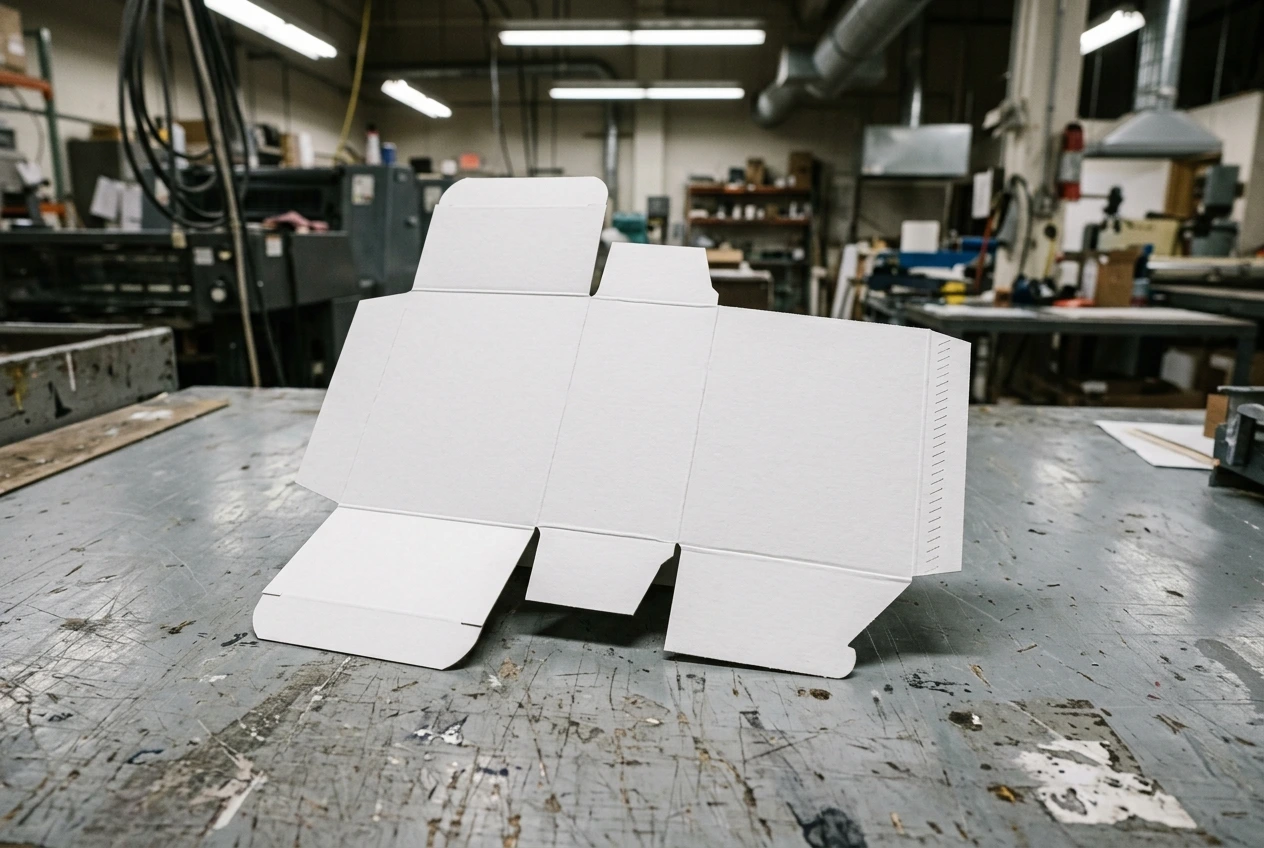
Esko’s ArtiosCAD description distinguishes 2D structural design and 3D views. A folded preview can reveal how panels relate, while the production sample shows the effects of the actual board and converting process. Neither should be mistaken for a completed machine trial.
| Handoff field | What to state | Ambiguity it prevents |
|---|---|---|
| File identity | Revision, date and responsible owner | Artwork on a superseded structure |
| View | Inside or outside, leading edge and print face | Reversed glue or opening orientation |
| Dimensions | Units, reference points and internal/external basis | Conflicting interpretations of pack size |
| Material | Grade, caliper and grain direction from the converter | A different fold response in the sample |
| Line types | Cut, crease, perforation and approved glue areas | Tooling based on a review mark |
| Sample | Identifier and exact source revision | Trial result detached from its drawing |
Record the material behind the shape
BOBST’s converting guide identifies cutting, creasing, folding and gluing as distinct operations. It also discusses how grain direction and moisture affect board behaviour. A new board can therefore change a structure even when the panel dimensions remain unchanged.
Ask the converter to specify the material and its relevant tolerances. Record the storage and conditioning history of the trial samples where it may affect comparison. Do not give the packing team a hand-made sample as though it represents production tooling.
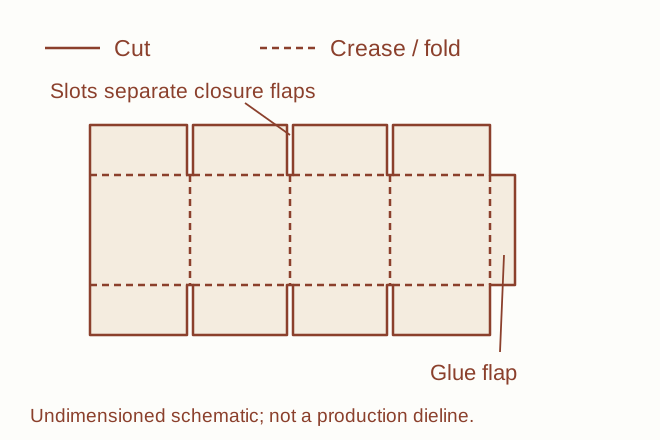
The slots separate adjacent closure flaps, while each dashed root keeps its flap attached to a body panel. Dashed vertical joins fold the body panels and the side glue flap. This undimensioned teaching net is not a die-ready drawing. Your controlled file must define the actual style and its intended closing sequence.
Turn the flat file into a sample brief
State how the carton is supplied: flat blank, pre-glued sleeve or another agreed form. Identify the opening face and the direction in which the product enters. If the product can snag or deform, bring a representative product or an approved substitute whose limitations are stated.
Check that all trial samples share the same revision. Mark any manually adjusted sample and keep it out of an unqualified production comparison. A crease deepened by hand may be useful during investigation, but it changes what the sample can prove.
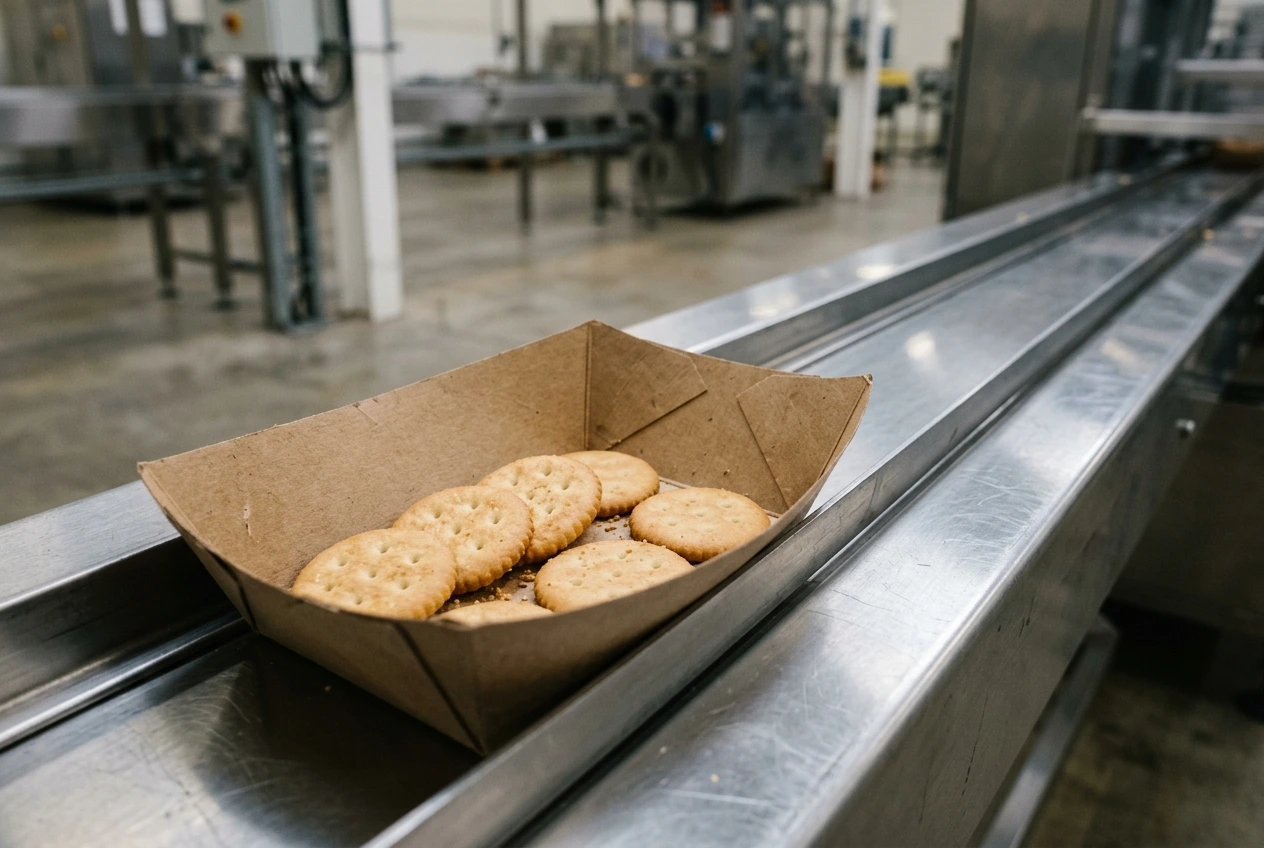
A folded tray shows why a crease is a physical feature as well as a line in a file. The corner and fold interaction need to be assessed in the delivered structure. This generic tray is not an extension of the carton net or a validated design.
Make the machine observation traceable
For each failed opening, loading or closing event, record the sample identity, machine setup and observed behaviour. Describe “rear flap remained outside the closure” instead of simply “carton failed.” Preserve a failed sample if possible and connect the photograph to the record.
Agree who may revise the structural file after a trial. The next sample set should carry a new revision, with a short change note identifying the altered feature. Compare that set under the same relevant conditions before attributing the improvement to the redesign.
Release the structure and artwork deliberately
A production handoff should contain a controlled structural file, the approved artwork mapped to it, material information and matched samples. Keep appearance approval separate from the record that authorises the structure for a specified process.
Use the packaging structure guide when preparing this package. If the change is a paper tray rather than a carton, the paper-tray case review provides a design brief focused on denesting, support and wrapping.